Discussion
Loading...

#Tag

  • About
  • Code of conduct
  • Privacy
  • About Bonfire
Em :official_verified:
Em :official_verified: boosted

Oakland Privacy
@oaklandprivacy@mastodon.social  ·  activity timestamp yesterday

An amazing resource by EFF around age verification on the internet.

https://www.eff.org/deeplinks/2025/12/age-verification-coming-internet-we-built-you-resource-hub-fight-back

#ageverification #eff #tech #internet #legal #privacy
1/2

Electronic Frontier Foundation

Age Verification Is Coming For the Internet. We Built You a Resource Hub to Fight Back.

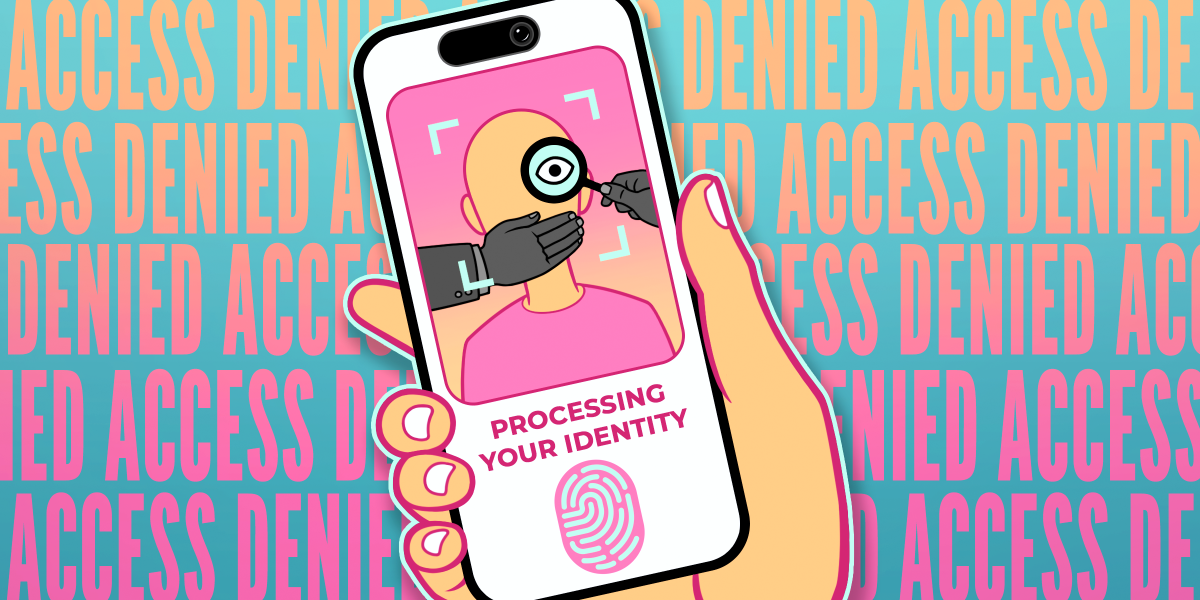
Age verification laws are proliferating fast across the United States and around the world, creating a dangerous and confusing tangle of rules about what we’re all allowed to see and do online. That's why today, we're launching EFF.org/Age, a one-stop shop for users seeking to understand what these laws actually do, what’s at stake, why EFF opposes all forms of age verification, how to protect yourself, and how to join the fight for a free, open, private, and yes—safe—internet.
  • Copy link
  • Flag this post
  • Block
Oakland Privacy
@oaklandprivacy@mastodon.social  ·  activity timestamp yesterday

An amazing resource by EFF around age verification on the internet.

https://www.eff.org/deeplinks/2025/12/age-verification-coming-internet-we-built-you-resource-hub-fight-back

#ageverification #eff #tech #internet #legal #privacy
1/2

Electronic Frontier Foundation

Age Verification Is Coming For the Internet. We Built You a Resource Hub to Fight Back.

Age verification laws are proliferating fast across the United States and around the world, creating a dangerous and confusing tangle of rules about what we’re all allowed to see and do online. That's why today, we're launching EFF.org/Age, a one-stop shop for users seeking to understand what these laws actually do, what’s at stake, why EFF opposes all forms of age verification, how to protect yourself, and how to join the fight for a free, open, private, and yes—safe—internet.
  • Copy link
  • Flag this post
  • Block
Em :official_verified:
Em :official_verified: boosted
knoppix
@knoppix95@mastodon.social  ·  activity timestamp 5 days ago

EFF launches a hub on rising age-verification laws, noting risks of surveillance and reduced access for youth and adults. 🔍

These mandates often rely on intrusive ID or biometric checks that expose sensitive data. 🔒
Experts will discuss impacts in upcoming AMA and livestream. 🎙️

@eff

🔗 https://www.eff.org/issues/age-verification

#TechNews #Privacy #Data #Security #Policy #Internet #DigitalRights #Surveillance #Censorship #Children #Safety #AI #Law #OpenWeb #Tech #EFF #Age #AgeVerification #Adult #ID #AMA

Electronic Frontier Foundation

Age Verification and Age Gating: Resource Hub

Age verification (or age-gating) laws generally require online services to check, estimate, or verify all users’ ages—often through invasive tools like ID checks, biometric scans, or other dubious “age estimation” methods—before granting them access to certain online content or services.  Governments in the U.S. and around the world are increasingly adopting these restrictive measures in the name of protecting children online. But in practice, these systems create dangerous new forms of surveillance, censorship, and exclusion.  Technologically, the age verification process can take many forms: collection and analysis of government ID, biometric scans, algorithmic or AI-based behavioral or user monitoring, digital ID, the list goes on. But no matter the method, every system demands users hand over sensitive and immutable personal information that links their offline identity to their online activity. Once that valuable data is collected, it can easily be leaked, hacked, or misused. (Indeed, we’ve already seen several breaches of age verification providers.) EFF has long warned against age-gating the internet. Age verification technology itself is often inaccurate and privacy-invasive. These restrictive mandates strike at the foundation of the free and open internet. They are tools of censorship, used to block people from viewing or sharing information that the government deems “harmful” or “offensive.” And they create surveillance systems that critically undermine online privacy, chill access to vital online communities and resources, and burden the expressive rights of adults and young people alike. EFF.org/Age: A Resource to Empower Users Age-gating mandates are reshaping the internet in ways that are invasive, dangerous, and deeply unnecessary. But users are not powerless! We can challenge these laws, protect our digital rights, and build a safer digital world for all internet users, no matter their ages. This resource hub is here to help—so explore, share, and join us in the fight for a better internet.
  • Copy link
  • Flag this post
  • Block
knoppix
@knoppix95@mastodon.social  ·  activity timestamp 5 days ago

EFF launches a hub on rising age-verification laws, noting risks of surveillance and reduced access for youth and adults. 🔍

These mandates often rely on intrusive ID or biometric checks that expose sensitive data. 🔒
Experts will discuss impacts in upcoming AMA and livestream. 🎙️

@eff

🔗 https://www.eff.org/issues/age-verification

#TechNews #Privacy #Data #Security #Policy #Internet #DigitalRights #Surveillance #Censorship #Children #Safety #AI #Law #OpenWeb #Tech #EFF #Age #AgeVerification #Adult #ID #AMA

Electronic Frontier Foundation

Age Verification and Age Gating: Resource Hub

Age verification (or age-gating) laws generally require online services to check, estimate, or verify all users’ ages—often through invasive tools like ID checks, biometric scans, or other dubious “age estimation” methods—before granting them access to certain online content or services.  Governments in the U.S. and around the world are increasingly adopting these restrictive measures in the name of protecting children online. But in practice, these systems create dangerous new forms of surveillance, censorship, and exclusion.  Technologically, the age verification process can take many forms: collection and analysis of government ID, biometric scans, algorithmic or AI-based behavioral or user monitoring, digital ID, the list goes on. But no matter the method, every system demands users hand over sensitive and immutable personal information that links their offline identity to their online activity. Once that valuable data is collected, it can easily be leaked, hacked, or misused. (Indeed, we’ve already seen several breaches of age verification providers.) EFF has long warned against age-gating the internet. Age verification technology itself is often inaccurate and privacy-invasive. These restrictive mandates strike at the foundation of the free and open internet. They are tools of censorship, used to block people from viewing or sharing information that the government deems “harmful” or “offensive.” And they create surveillance systems that critically undermine online privacy, chill access to vital online communities and resources, and burden the expressive rights of adults and young people alike. EFF.org/Age: A Resource to Empower Users Age-gating mandates are reshaping the internet in ways that are invasive, dangerous, and deeply unnecessary. But users are not powerless! We can challenge these laws, protect our digital rights, and build a safer digital world for all internet users, no matter their ages. This resource hub is here to help—so explore, share, and join us in the fight for a better internet.
  • Copy link
  • Flag this post
  • Block
Log in

Gnar🔥 social

Federated bonfire social space for those into gnarly adventures. From shredding mountains to guitars if you enjoy gnar, come share your stoke and adventures!

Gnar🔥 social: About · Code of conduct · Privacy ·
Gnar-fire social · 1.0.0-rc.2.33 no JS en
Automatic federation enabled
  • Explore
  • About
  • Code of Conduct
Home
Login