Em :official_verified:
boosted
#Tag

Fewer than 60,000 people – 0.001% of the world’s population – control three times as much wealth as the entire bottom half of humanity, according to the authoritative World Inequality Report 2026, based on data compiled by 200 researchers, that argues global inequality has reached such extremes that urgent action has become essential.
#capitalism #socialism #anarchism #communism #leftism #workerRight #taxTheRich #eatTheRich #economy #science #research #inequality #union
Fewer than 60,000 people – 0.001% of the world’s population – control three times as much wealth as the entire bottom half of humanity, according to the authoritative World Inequality Report 2026, based on data compiled by 200 researchers, that argues global inequality has reached such extremes that urgent action has become essential.
#capitalism #socialism #anarchism #communism #leftism #workerRight #taxTheRich #eatTheRich #economy #science #research #inequality #union
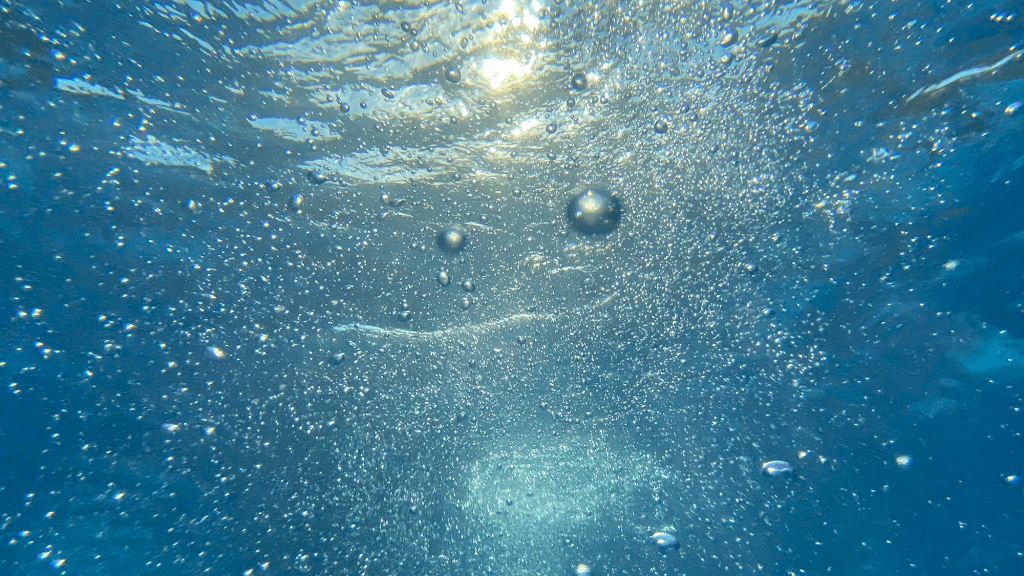
As humanity pumps carbon dioxide into the atmosphere, the ocean absorbs about a quarter of it. This exchange happens largely through bubbles created by breaking waves. When waves grow large enough to break, their crests curl over and crash down, trapping air beneath them. The turbulence of the upper ocean can push these buoyant bubbles meters under the surface, where the gases inside them dissolve into the surrounding water. This is how the ocean gets the oxygen used by marine animals, but it’s also how it gathers up carbon dioxide.
Current climate models often approximate this process using only the wind speed, but a recent study took matters a step further by modeling wave breaking and bubble generation, too. While they found a global carbon uptake that was similar to existing models, the researchers found their breaking wave model showed more variability in where carbon gets stored. For example, more carbon got absorbed in the southern hemisphere, where oceans are consistently rougher, than in the northern hemisphere, where large landmasses shelter the oceans. (Image credit: J. Kernwein; research credit: P. Rustogi et al.; via Eos)
#breakingWave #bubble #climateChange #fluidDynamics #oceanography #physics #science
Influence of Wave‐Induced Variability on Ocean Carbon Uptake
As humanity pumps carbon dioxide into the atmosphere, the ocean absorbs about a quarter of it. This exchange happens largely through bubbles created by breaking waves. When waves grow large enough to break, their crests curl over and crash down, trapping air beneath them. The turbulence of the upper ocean can push these buoyant bubbles meters under the surface, where the gases inside them dissolve into the surrounding water. This is how the ocean gets the oxygen used by marine animals, but it’s also how it gathers up carbon dioxide.
Current climate models often approximate this process using only the wind speed, but a recent study took matters a step further by modeling wave breaking and bubble generation, too. While they found a global carbon uptake that was similar to existing models, the researchers found their breaking wave model showed more variability in where carbon gets stored. For example, more carbon got absorbed in the southern hemisphere, where oceans are consistently rougher, than in the northern hemisphere, where large landmasses shelter the oceans. (Image credit: J. Kernwein; research credit: P. Rustogi et al.; via Eos)
#breakingWave #bubble #climateChange #fluidDynamics #oceanography #physics #science
Influence of Wave‐Induced Variability on Ocean Carbon Uptake
Speaking of the #RaspberryPi CM5, there's a new carrier board coming out - an open-hardware design which adapts it into a mini-ITX form factor complete with x16 (mechanical, it's still one-lane) PCI Express slot.
More #science next with an iron-on material which makes integrated soft circuits into clothing and other fabrics as easy as ironing on a patch.
There's still one in the queue (and one embargoed until tomorrow,) but here's my latest for #Hackster - starting with one from last week I hadn't mentioned yet: a project to generate sound which can be picked up by smartphone microphones to help locate people (or, I guess, their phones) buried under rubble after a disaster.
Federated bonfire social space for those into gnarly adventures. From shredding mountains to guitars if you enjoy gnar, come share your stoke and adventures!